How I Introduce a New Cat to a Multi Cat Household

Adding one more cat to a house that already has a houseful is not the same as bringing a kitten home to an empty apartment. There are established routines, existing hierarchies, and cats who already have very strong opinions about their space. I have done this more than once, and I have learned just as much from what went wrong as from what went right.
If you are staring at a new cat and wondering how you are going to fold them into a household that already has a full crew, here is exactly what I do.

Why Introducing a Cat to a Multi Cat Home Is Different
With one resident cat, you are managing one relationship. With seven, you are managing seven individual relationships plus however many smaller alliances already exist inside that group.
Some of my cats are bonded pairs who do everything together. Others mostly keep to themselves. A new cat does not just meet “the household”; they meet each personality separately, on that cat’s own terms.
Kittens and Adult Cats Do Not Follow the Same Rules
One thing I have learned firsthand is that kittens and older cats are not the same project. With kittens, I have been able to skip most of the slow introduction process entirely. We have brought kittens in and had them supervised in the same room with the rest of the crew almost right away, and they adjusted within days. Kittens tend to read as non-threatening to adult cats, and they usually do not have the baggage of territory or hierarchy yet, so the whole thing moves faster.

An adult cat is a different story.
Older cats already have an established sense of their space and their place in the group, and so does everyone already living there. That is when I follow the slower, more deliberate process laid out below. Only you know your own cats’ temperament and what they can handle, but in general, assume an adult cat introduction needs the full process and a kitten introduction might not.
Start With Full Separation, Not a Slow Meet and Greet
The instinct is to let the new cat explore a little and see how it goes. This is really going to depend on the cats you already have in your home, but in the past few times, the new cat gets their own room, with their own litter box, food, water, and a hiding spot, completely separate from the rest of the house for at least the first several days. I usually assign this to one of my kids, who gladly will take on the role of new pet parent for the time needed.
Separating does two things. It gives the new cat a place to decompress without seven sets of eyes on them, and it keeps my resident cats from feeling like their territory has been invaded overnight. Cats process scent before they process sight, so this quiet period matters more than people expect.
Swap Scent Before Anyone Sees Each Other
Once the new cat is settled, I start swapping blankets and small towels between their room and the rest of the house. I will also pet the new cat, then go pet a few of my resident cats without washing my hands in between, and do the same thing in reverse.
It sounds small, but by the time cats actually see each other face to face, they have already been introduced by smell dozens of times.
Let the Introduction Move at the Slowest Cat’s Pace
In a house with this many cats, someone is always going to be the holdout. I have had cats who accepted a newcomer within a week, and I have had one take almost two months. I let that slowest cat set the pace for the whole household rather than forcing supervised visits before everyone is ready.
Rushing this step is the number one reason introductions fail and turn into long-term tension instead of a short adjustment period. In our house, we always think it’s gonna be Queso, but my girl cats can really be the holdouts. We have one elderly cat who refuses to be anyone’s friend, and thatis okay too. The newcomers usually learn that she is a lone cat inside a busy cat household and likes it that way.

It Can Take Longer Than You Think, Even With Siblings
People assume that if two cats are already related, the introduction will be quick. That has not always been true for us.
We once brought home a pair of siblings three weeks apart from each other rather than together, and even though they had come from the same litter, it still took real time for them to warm back up to one another.
If littermates need patience, an unrelated cat joining your household absolutely will too. I mention this because it is easy to get discouraged if things are not clicking in the first few days, but slow does not mean it is failing, it usually just means it is working the way it is supposed to.
Small Things That Help the Process Along
A few small additions have made a real difference for us during introductions.
Catnip, or pheromone plugin diffusers, tends to take the edge off tension during those early face to face moments. Beyond that, it really comes down to personal time.
Lots of one on one petting with the new cat helps them feel secure, but I am just as intentional about going back and giving that same love to every resident cat so no one feels replaced or pushed aside. One habit that has genuinely helped keep the peace in our house is petting the older, resident cat again right after handling the new cat, so their scent is right there together and no one feels like they are being left out of the affection.



Keep Resources Separate Even After Everyone Seems Fine
Once cats are coexisting peacefully, it is tempting to consolidate everything back down quickly.
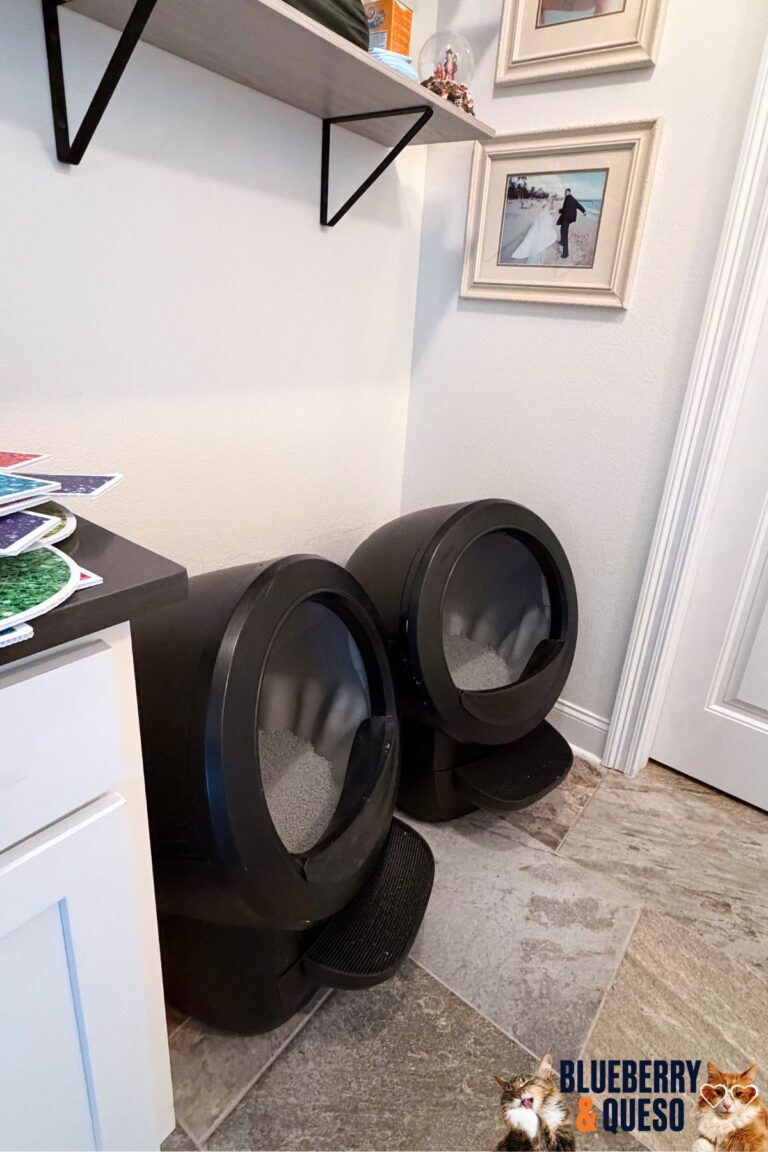
In a house with this many cats, having litter boxes and feeding stations spread out in multiple locations prevents one cat from guarding a single resource and keeps any lingering tension from resurfacing. We keep 2 litter boxes in a front room, 1 in a back room, and one in the garage (with a cat door) to allow a lot of privacy. We also have 2 water fountains and 2 areas where we keep pet food.
Give the New Cat Their Own Enrichment, Not Just Access to Shared Toys
A new cat entering an established household often gets stuck at the bottom of the pecking order, especially if resources feel limited. I make sure the new cat has a few toys that are just theirs in their own space before they are ever expected to share communal toys with the rest of the group. Here are some new cat toys we picked up for summer, if you want some ideas.

It takes time!
The biggest mistake I made early on was rushing the timeline because everyone seemed calm. Calm is not the same as comfortable. A cat can tolerate a new presence in the house without actually trusting them yet, and pushing supervised time together too soon sets one relationship back by weeks.
A lot of people assume that if two cats are not getting along within the first few days or weeks, they are simply incompatible. In my experience, that is usually not true.
Hissing, avoidance, and general standoffishness in that early window is normal, not a red flag. Do not give up on cats being compatible just because it is not happening quickly. It takes time, and rushing to the conclusion that it is not going to work is one of the most common mistakes people make.
If you want to see how this all eventually played out and meet everyone involved, my [meet the crew] article introduces all seven cats and where each one landed in the household after their own introduction.
Every cat in this house came in as “the new cat” at some point. Some of them settled in within days. A couple took real patience. All of them are part of the family now, and that is the part worth remembering when week one feels slow.