How to Get Rid of Cat Pee Smell For Good: A 5 Step Method That Works

If you have ever gotten down on your hands and knees, nose practically touching the carpet, trying to play detective with a smell you cannot quite locate, welcome to the club. Cat urine is not like other messes. You can clean a spot a dozen times and still catch a whiff of it on a humid day, or worse, your cat finds the exact same spot again and you are right back where you started, questioning every life choice that led you to this moment.
I have had cats my entire life, and I mean that literally. Across the years I have raised seventeen animals total, and right now my house is running at a comfortable chaos level with seven cats (Queso, Blueberry, Atlas, Mystique, Cocoa Puff, Hercules, and Tofu), a dog, and a bearded dragon who watches the whole circus with what I can only describe as judgment.
If you want to skip straight to the shopping list, I put together a Cat Pee Odor Product Cheat Sheet with everything linked by step.

Seventeen animals is a lot of litter boxes, a lot of personalities, and yes, a lot of accidental and not so accidental peeing in places it should not happen. If there is a cat pee mistake to make, I have probably made it, cleaned it wrong the first three times, and eventually figured out what actually works.
I want to be upfront that I am not a vet. I do have vets in my family, and between that and a houseful of animals, I have spent plenty of time in exam rooms over the years, but none of that makes me a substitute for one. If your cat is suddenly peeing outside the litter box, the first move is always to rule out a medical issue. Urinary tract infections, crystals, kidney disease, and a long list of other conditions can all show up as inappropriate urination, and no enzyme cleaner on earth fixes a medical problem.
Get your cat checked first, every time. What I am sharing below is what works once medical causes have been ruled out, or once you are clearly dealing with a territorial or behavioral marking situation rather than a health one.
First, Let Go of the Idea That Marking Is Only an “Unfixed Cat” Problem
There is a popular idea floating around that marking only happens with unneutered or unspayed cats, or that it always signals a medical issue. Getting your pets fixed absolutely matters and it does reduce marking significantly, but it does not erase it completely, and I learned that the hard way with cats who had nothing wrong with them medically and were very much fixed.
Sometimes it is about territory.
Sometimes one cat is telling another cat, in no uncertain terms, that a particular spot belongs to them and they should back off. In a multi-cat household especially, you will often see the most confident cat in the group marking specific spots simply to establish who runs things. It is not always a cry for help and it is not always a medical red flag.
Sometimes it is just cat politics, and once you accept that, you stop panicking every time it happens and start actually dealing with it.
Step One: Find Every Spot, Not Just the Obvious Ones
You probably already know about the blanket your cat sprayed last week or the corner of the couch that smells a little off. What you likely do not know is everywhere else they have marked, because cats are sneaky about it and your own nose adjusts to smells over time without you realizing it.
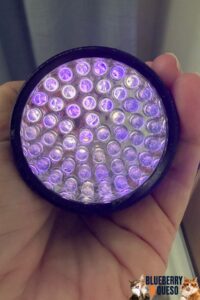
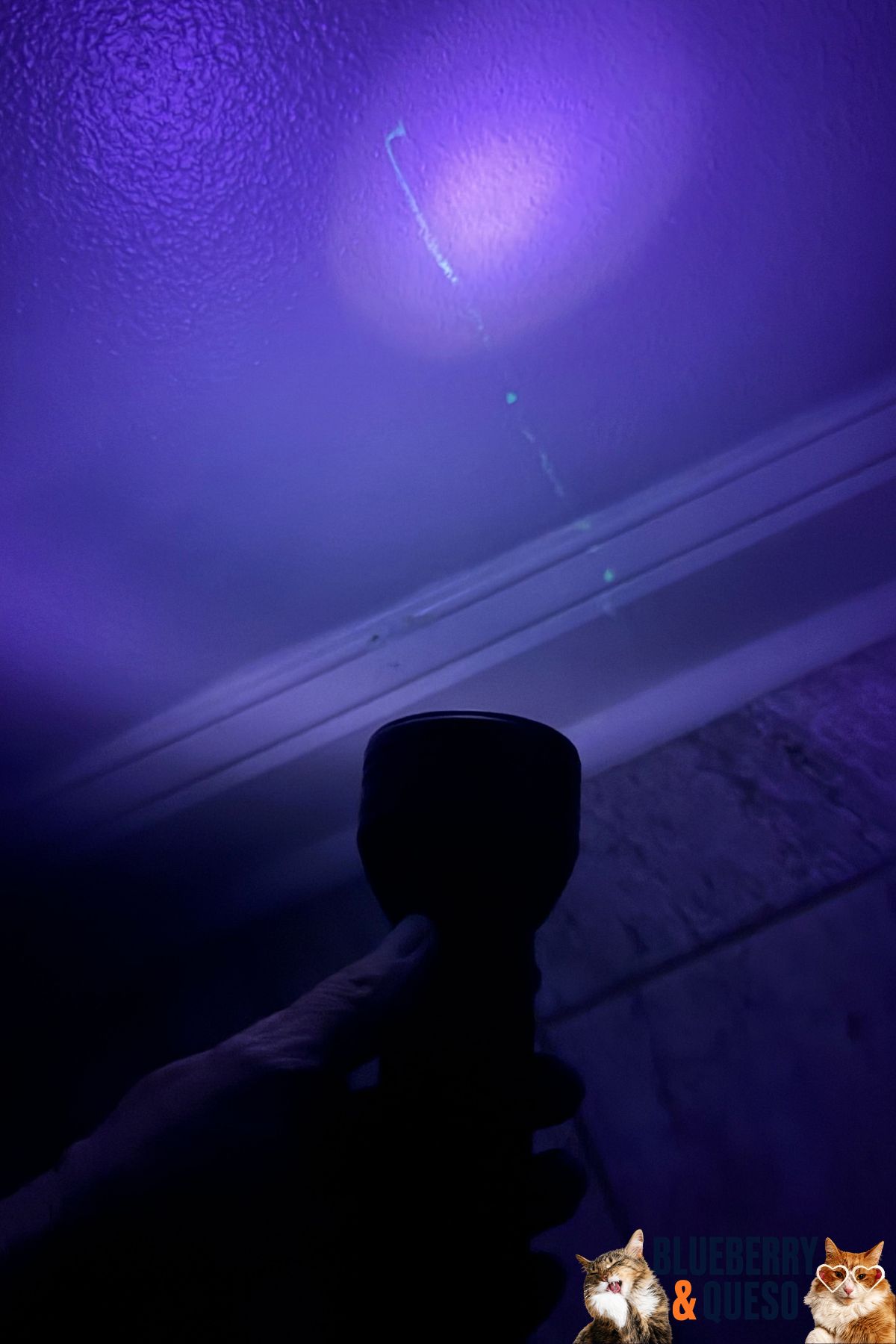
The best tool I have found for this is a UV black light flashlight, and I genuinely cannot recommend it enough. It is not a perfect science, but it works remarkably well at lighting up dried urine on walls, curtains, baseboards, and furniture.
Blacklight Flashlight
This is the blacklight flashlight we own to identify cat pee.
Under the black light, old urine glows a greenish color that is hard to miss once you know what you are looking for. Wait until it is dark, close your curtains, and walk slowly around your house with the flashlight, checking corners, the bottoms of curtains, baseboards, and furniture legs. When you find a spot, mark it with a piece of painter’s tape so you do not lose track of it once the lights come back on.
You will probably find more spots than you expected, and that is exactly the point. You cannot treat what you cannot find, and I promise your nose is not as reliable a detector as you think it is.
(If you really want to be shocked, use the blacklight around the toilets and see how badly the men in your home miss)
Step Two: Resist the Urge to Reach for Bleach
If the urine spot is still wet, your first instinct might be to grab whatever heavy duty cleaner is under your sink, maybe even bleach. Do not. I know it feels like the responsible, thorough thing to do, but bleach and other harsh chemical cleaners can actually make the long term smell problem worse, not better.
They can interfere with the enzyme treatment you are about to use, and in some cases bleach can even attract cats back to the same spot rather than repelling them, which feels almost personally insulting after all that scrubbing.
Instead, just blot up as much of the urine as you can with a towel and plain water. No soap, no cleaners, nothing fancy. You are not trying to fully clean the spot at this stage; you are simply removing the excess so the enzyme treatment in the next step can actually do its job.
Step Three: Breaking Down the Crystals Is Non-Negotiable, and Not All Cleaners Do It
Here is the part many people get wrong. Regular cleaning products, even the ones that smell strong and “clean,” do not break down the uric acid crystals in cat urine. It smells cleaner but those crystals are what keep drawing your cat back to the same spot long after you think you have cleaned it, and they are also what makes that smell come roaring back the second it gets humid.
The only thing that actually breaks those crystals down is either an enzyme cleaner or a specially formulated blend built to dismantle urine at the molecular level.
Nature’s Miracle is probably the most well known enzyme cleaner out there, but I am not a fan of it for one specific reason. It leaves behind its own detergent smell, which means you trade one smell for another. I do not want my house smelling like a cleaning product layered on top of old cat pee. I want it smelling like nothing happened here at all. While I have nothing bad to say about the line of products, they do work, if you want something that smells like nothing, keep reading.
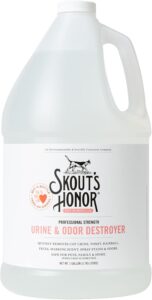
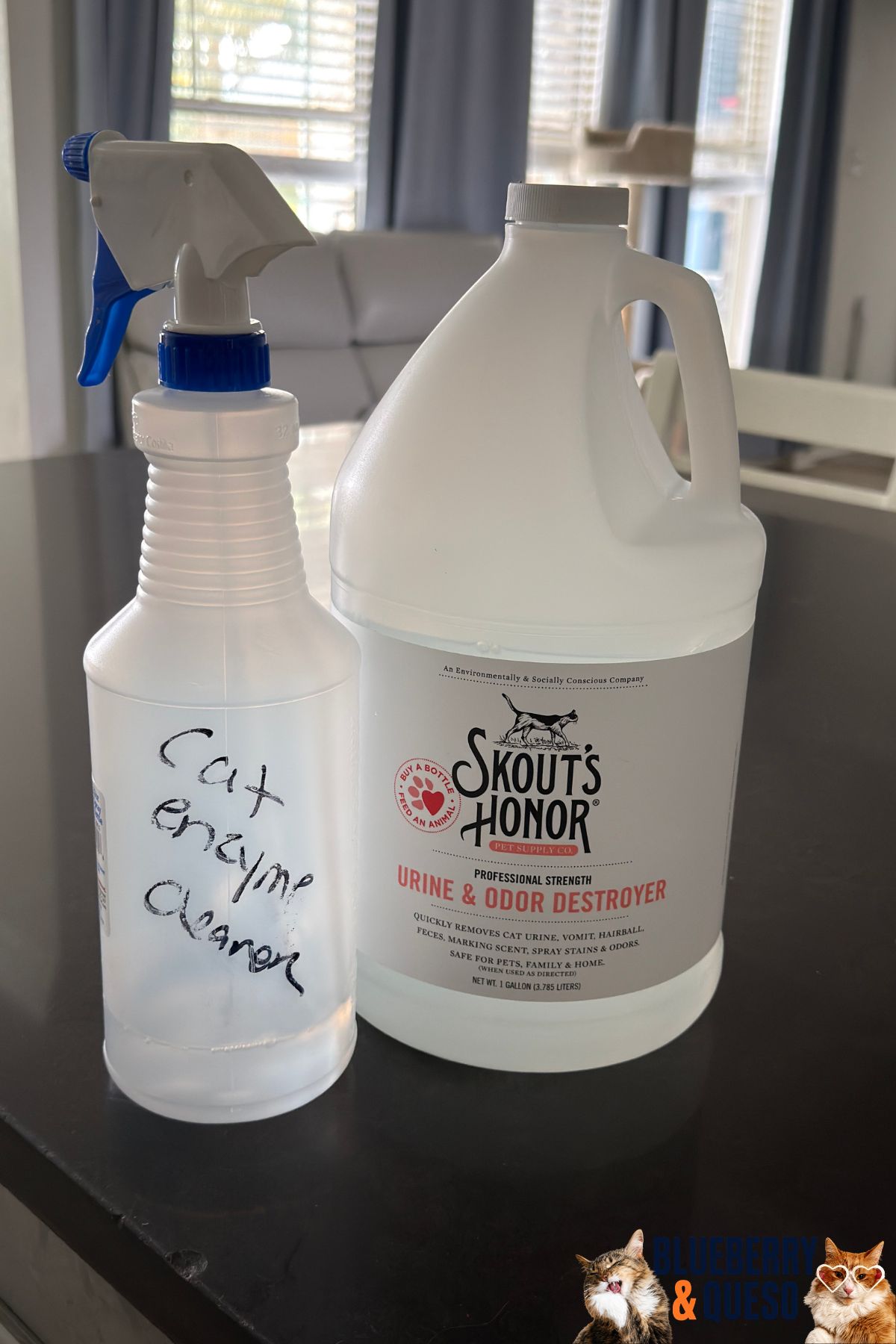
Two products have earned a permanent spot in my home. The first is Skout’s Honor, which I buy in the gallon size and refill into spray bottles I keep stashed around the house. They do not use enzymes, it’s what they call a “proprietary blend” that removes the urine on a molecular level. It works, that’s all I know.
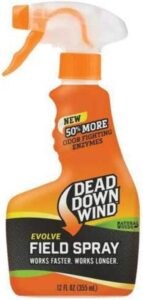
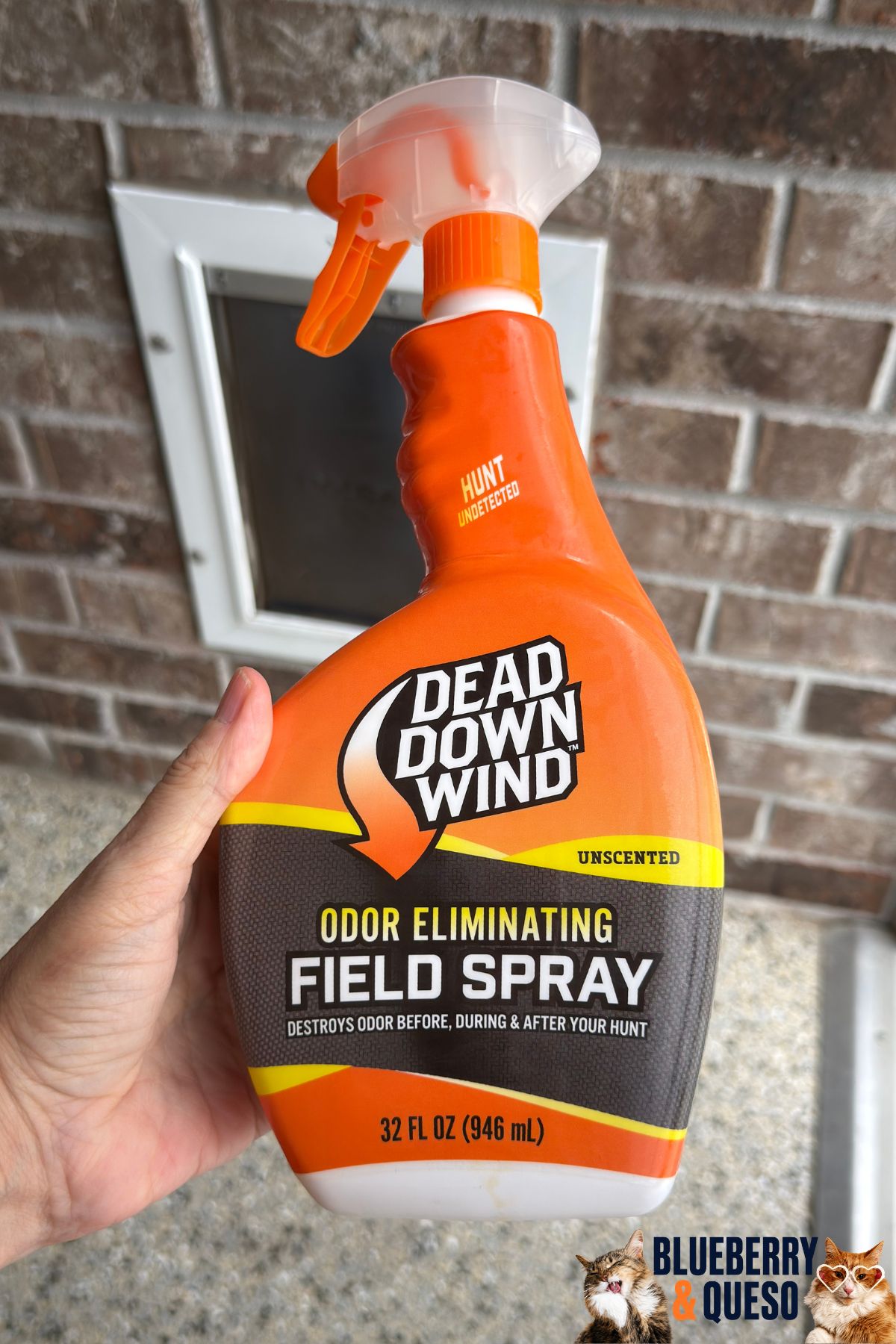
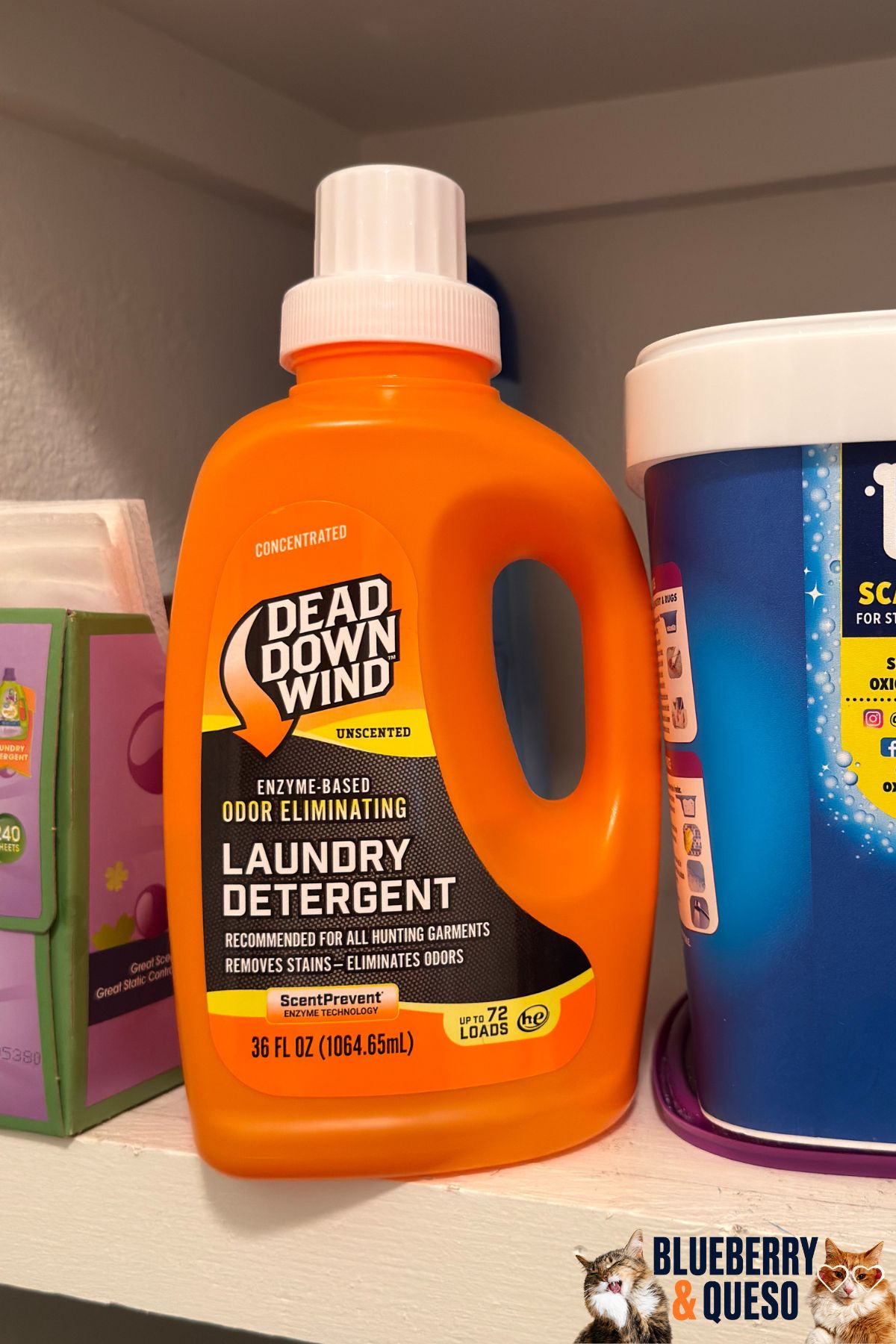
The second, and the one I actually recommend most, is Dead Down Wind. It is made for hunters, designed to eliminate scent so completely that animals cannot detect a hunter’s presence, and it turns out that same science works just as well on cat urine.
There is no perfume smell trying to cover anything up. It just removes the odor entirely, which is honestly all I have ever wanted from a cleaning product.
Here is my method:
After blotting up any excess urine with water, I spray the area generously with Dead Down Wind and let it sit for fifteen minutes before blotting up the extra spray. I love doing this at night, right before bed, so it has hours to work undisturbed while everyone in the house, animals included, is asleep. And I do not stop at the active urine spots.
I treat anywhere I know there is a reasonable chance of past marking or lingering scent, even if I cannot smell anything myself, including the back of the couch, blankets, walls, and corners. The mist spray bottle makes it easy to cover a lot of ground quickly.
I always treat each spot twice. Spray, let it sit for the full fifteen minutes, blot, let it dry completely, then repeat the entire process a second time before moving on. By the next day, once everything is fully dry, there should be no scent at all, not from the urine and not from the cleaner itself.
A note for fabrics: One quick note if you are dealing with bedding, blankets, or cat beds that need to go through the wash: Dead Down Wind Laundry Detergent or this Enzyme laundry booster are both great for that, though that is really a topic for its own article down the road.
Step Four: Make the Spot Unappealing for a Repeat Performance
Even after a spot is completely clean, some cats will try to mark it again, especially if it is tied to territory or another animal in the house. This is sometimes a battle of wills you cannot fully win, but you can make those spots far less appealing.
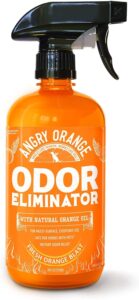
I use Angry Orange on every previously marked area (AFTER THE ENZYME CLEANER IS DONE), along with corners, walls, and other high risk zones. It has a noticeable citrus scent when first applied that dries down to something much more subtle. Cats generally are not fans of citrus, which makes it a useful deterrent layered on top of the enzyme treatment, not a replacement for it. Although this should be obvious, do not use angry orange on things you WANT your cat to go to – like the litter box.
Sometimes the Item Itself Is the Problem, Not the Surface
I will also tell you something that I feel like I have learned – Sometimes the item itself is the problem, not the surface underneath it, and no amount of cleaning is going to break that connection. We once had a blanket on the couch that one of our cats kept peeing on no matter what we did. I treated that couch with the full method but the blanket kept getting marked again like clockwork. The fix was not a better cleaner. The fix was getting rid of the blanket entirely and replacing it with a new one. The couch itself, once properly treated, was never touched again. The blanket had become the habit, not the couch.
I know that can feel wasteful, but you are either going to get a new blanket or spend money and stress with cleaning supplies (in my personal experience).
The same thing happened with my son’s bed. A cat had decided his pile of sheets and the comforter were prime marking territory, and we fought that battle with every product I owned before finally admitting defeat and just replacing the comforter, the sheets, and eventually the mattress itself. It felt like giving in, but it was actually the smartest move we made, because the marking stopped completely once those specific items were gone.
We use a VERY GOOD mattress cover now as a just-in-case measure, and it has been smooth sailing since. If you are dealing with a hard surface like carpet, tile, walls, or a couch frame, this method will get you there. If you are dealing with the same blanket, comforter, or pile of clothes getting hit again and again, sometimes the most effective and least frustrating solution is simply to retire the item and start fresh.
Step Five: Address the Why, Not Just the Where
Cleaning up the mess and discouraging a repeat are both necessary, but if there is an underlying stress or territorial issue driving the marking, you also want to work on calming things down at the source (as much as possible).
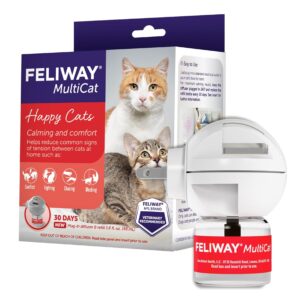
Pheromone products are commonly recommended, and in some cases they genuinely do help. In our house, the Feliway Multi-Cat plugin diffuser has worked the best out of anything we have tried (and yes, we have tried about 4 generic brands but come back to that one).
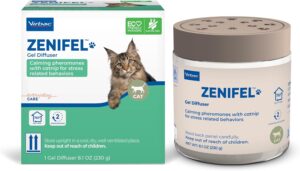
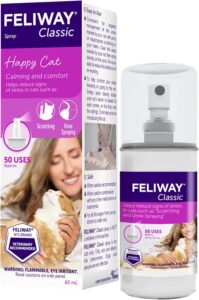
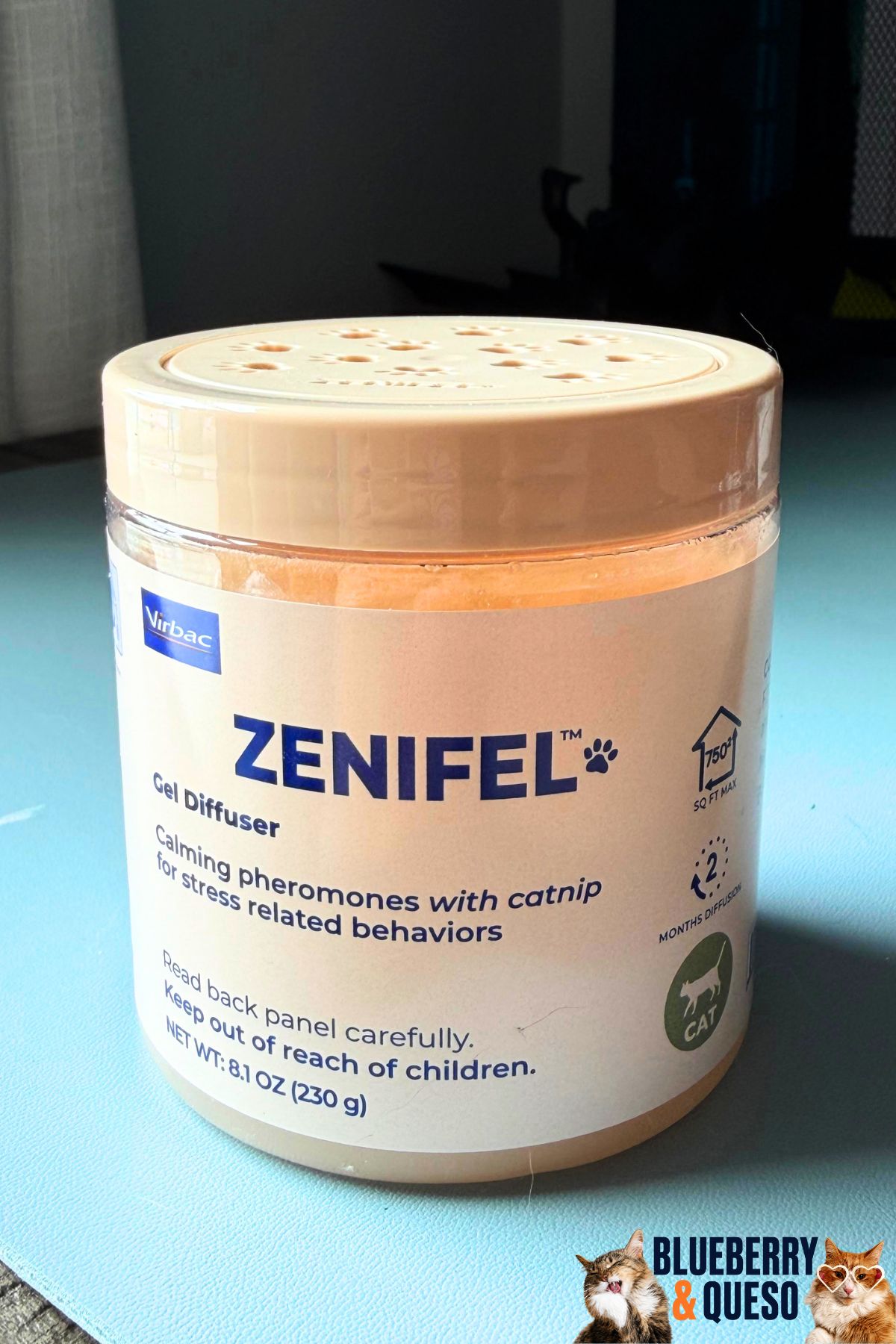
I have also come to really like the Feliway spray as well, which I apply directly on cat beds and cat condos, basically anywhere my cats spend the most time. I also keep jars of Zenifel ( I got mine on Chewy, they were doing a half off for them when you sign up for the auto delivery) placed in four different areas around the house, which is a nice option if you would rather not deal with plugins at all. I personally use both.
Beyond the products, the basics matter.
- Keep litter boxes clean and accessible.
- Give your cats plenty of enrichment so they are not bored or anxious.
- Make time for daily reassurance, especially if you have multiple cats working out a pecking order.
None of that is a quick fix, but combined with the cleaning steps above, it is genuinely the most effective approach I have found across seventeen animals in the last 25 years for getting a handle on cat pee smell in your home.
Want this whole list in one place to save or come back to later? Grab the Cat Pee Odor Product List with every product organized by step. If this helps you, please subscribe to my newsletter or follow me on social media so we can connect!